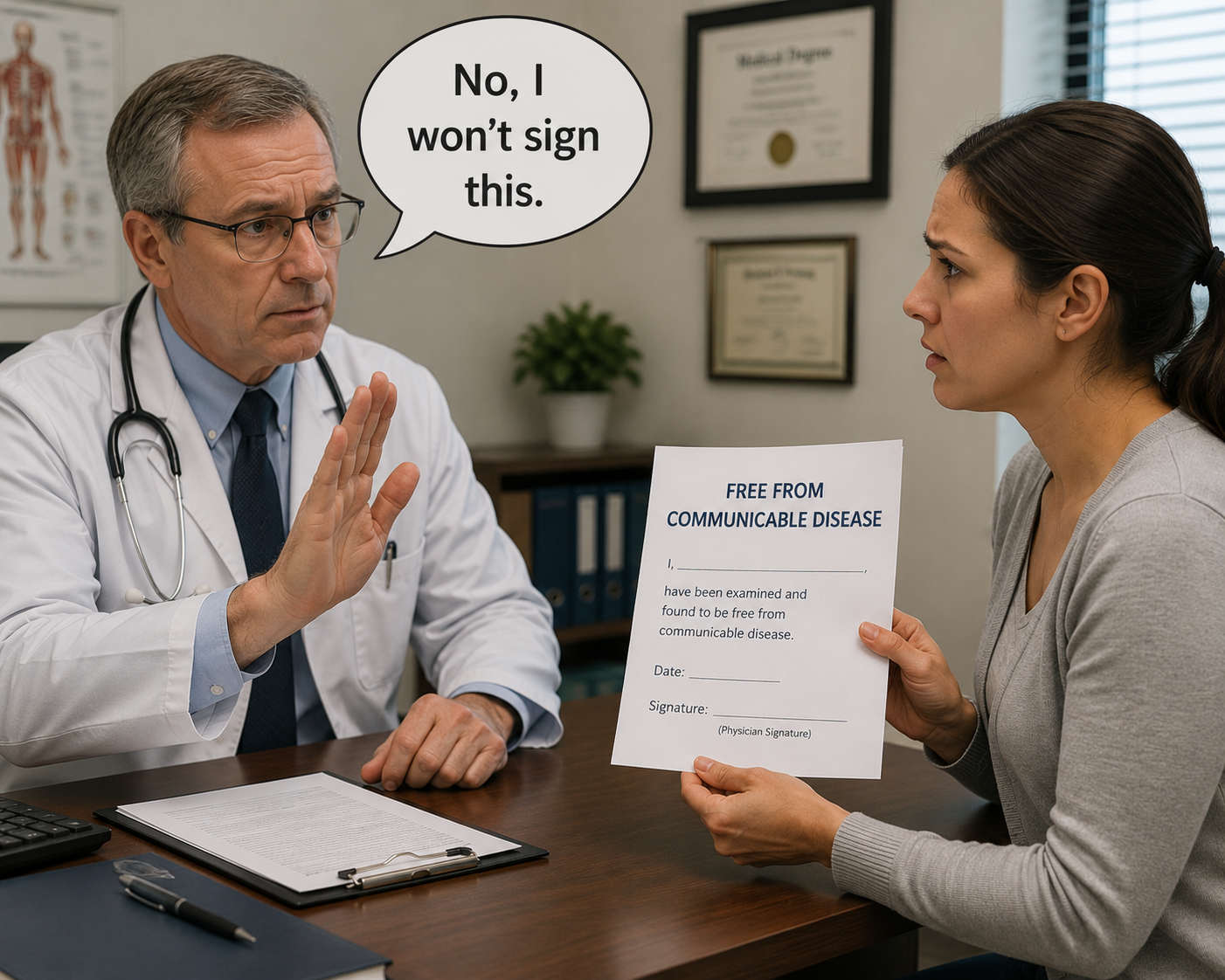
Florida nurse registries are required to ensure that every caregiver they refer is “free from communicable disease.”
At first glance, that sounds straightforward. In practice, it is one of the most inconsistently applied requirements in the industry.
This confusion is not due to a lack of effort. It comes from how the law is written.
The Statutory Requirement
Under Florida law, nurse registries must ensure that caregivers provide documentation confirming they are free from communicable disease prior to client contact.
This requirement is outlined in:
The rule states that:
- The statement must come from a licensed healthcare professional
- It must be dated within the last 6 months
- It must confirm the caregiver is free from communicable diseases
That is the requirement.
What the Law Does NOT Define
Here is where things get important.
The regulation tells you what must be documented, but it does not define:
- What diseases must be screened
- What type of evaluation must be performed
- What format the documentation must take
- What criteria determine clearance
Historically, the rule required that the determination be:
- “based upon an examination”
That language was removed in later revisions.
As a result:
The method of determining whether someone is “free from communicable disease” is left to the clinical judgment of the licensed healthcare professional.
What is NOT Required (This Is Where Most Registries and Physicians Get It Wrong)
This is one of the most important clarifications for nurse registries:
A full in-person physical exam is NOT required by the regulation
There is no language in current Florida nurse registry rules that requires:
- A hands-on physical exam
- An in-office physician visit
- Lab testing
- A specific medical facility or provider type
Those may be used, but they are not mandated.
This is a direct result of removing the prior requirement for an “examination.”
Why This Misunderstanding Exists
Many registries still operate as if a full physical is required because:
- That used to be implied under older rule language
- Medical providers default to traditional evaluation models
- There is no standardized guidance from regulators
As a result, the industry has drifted toward:
- Urgent care visits
- Primary care physicals
- Higher-cost evaluations
Even though the regulation itself does not require these.
Why Registries All Do It Differently
Because the process is not defined, registries have developed their own interpretations.
Common approaches include:
- Sending caregivers to urgent care
- Accepting physician notes
- Creating internal screening forms
- Accepting prior employer documentation
None of these are explicitly required by law.
They are simply different ways of satisfying the same requirement.
Each approach to solving the problem includes its own liabilities.
What the Requirement Actually Comes Down To
At its core, the requirement has three elements:
- A licensed healthcare professional is involved
- A determination is made
- A statement is issued confirming the caregiver is free from communicable disease
That is the standard.
Not a physical exam.
Not a specific test.
Not a specific location.
A Structured, Defensible Approach
Given the flexibility in the regulation, many compliant systems rely on structured screening models.
These are not new concepts. They are already used in healthcare systems.
For example:
- State health departments use symptom and exposure questionnaires
- Hospitals use screening tools to identify risk before escalation
These models focus on:
- Symptom review
- Exposure history
- Risk-based follow-up
A compliant caregiver screening process can follow the same structure:
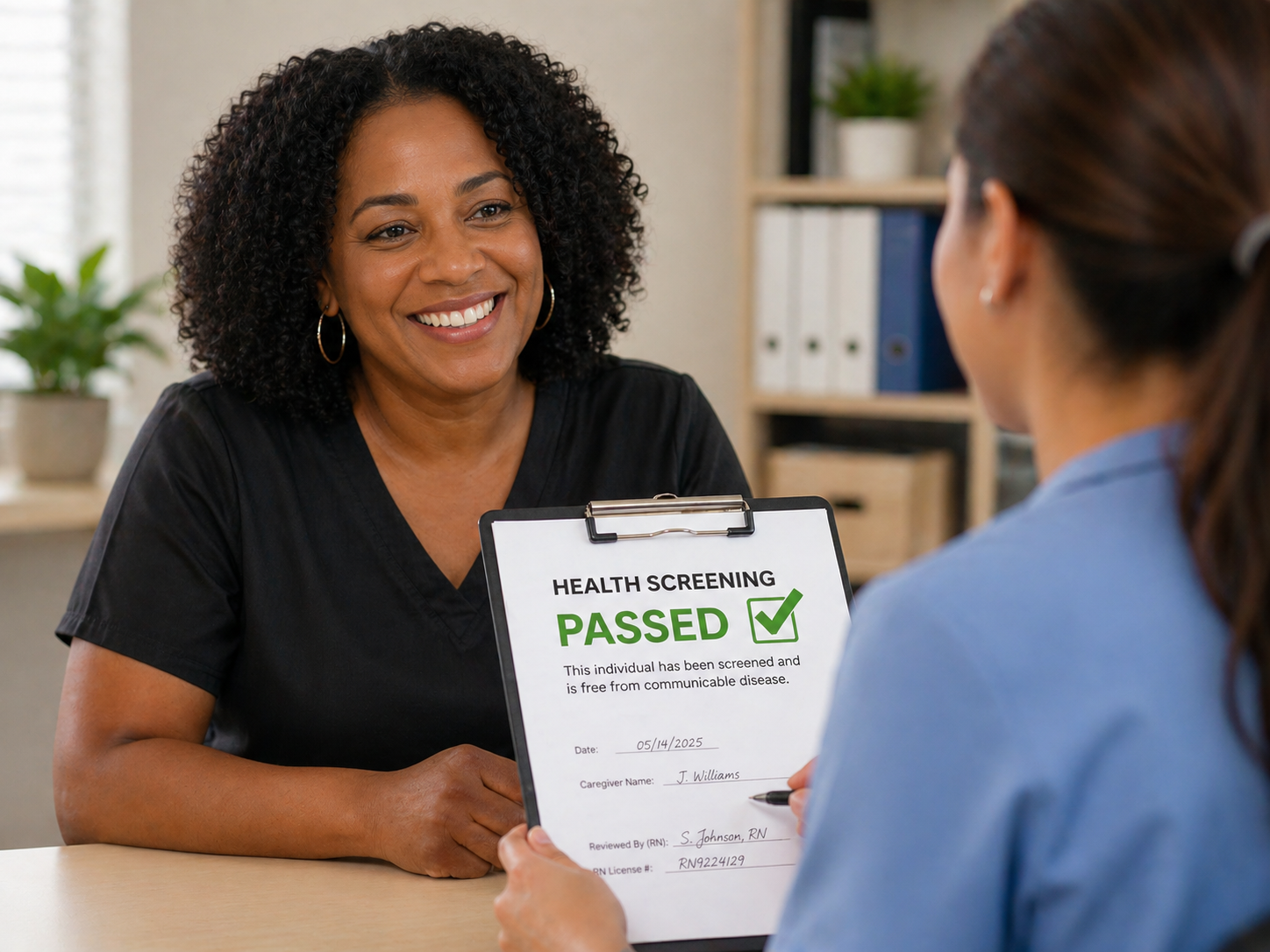
- Caregiver completes a screening questionnaire
- A licensed professional reviews the responses
- If no risk is identified, a statement is issued
- If risk is identified, the caregiver is referred for further evaluation
This aligns with established screening practices and remains within the flexibility allowed by the regulation.
Why This Matters for Nurse Registries
This requirement is not just a form. It is part of your compliance system.
Registries must ensure:
- Documentation is obtained before referral
- The documentation meets statutory criteria
- The process is consistent and defensible
Overbuilding the requirement, such as requiring full physical exams, can create:
- Unnecessary cost for caregivers
- Barriers to onboarding
- Operational inefficiencies
Underbuilding it creates compliance risk.
The goal is balance.
Where MyHealthForm.com Fits
MyHealthForm.com was built to address this exact gap.
It provides:
- A structured screening process
- Review by a licensed professional operating under a physician protocol
- A compliant health statement aligned with Florida requirements
- Allows form verification to eliminate fraudulent screenings
This allows registries to:
- Avoid creating internal clinical processes
- Avoid over-controlling independent contractors
- Offer caregivers a faster, more affordable option
Most importantly, it introduces consistency where the regulation does not.
The Bottom Line
Florida requires that caregivers be documented as “free from communicable disease.”
It does NOT require:
- A full in-person physical exam
- A specific type of medical visit
- A defined testing process
That distinction matters.
Understanding what is required and what is not is the first step in building a compliant, efficient, and scalable nurse registry operation.